




At RMS, our Learning Support (SEND) is called PALS (Provision of Assisted Learning and Support), working alongside our Personalised Learning initiative to ensure every student thrives. Our PALS team works closely with students, parents, and schools to ensure a smooth transition and continuous academic growth.
Support by Year Group
How we identify and tailor support needs:
-
Pre-Entry: Review of professional reports, entrance assessments, and feeder school liaison to understand your child’s learning profile.
- Formal Assessments:
- Key Stage 1: Phonics screening
- Years 3-6: Quest – an online evaluation tool used to identify students who may need additional support or challenge and to track their progress.
- Year 7: MidYIS – used to evaluate a student’s underlying learning aptitude and highlight those students in need of additional support.
- Year 10: Yellis – an online assessment evaluating vocabulary, mathematics and non-verbal ability used to predict GCSE grades and monitor pupil progress against predictions.
- Year 12: Alis – an online assessment evaluating vocabulary, mathematics and non-verbal ability, used to identify strengths and weaknesses as well as to predict A level grades.
-
Ongoing: Regular teacher feedback, in-class assessments, and collaborative parent meetings to adjust learning pathways. It is important that parents keep the school updated with any planned assessments or external support so that we can appropriately support and guide this process.
-
In the Classroom: Adaptive Teaching, assistive technology, and a personalised approach to support the learning needs of individual students.
All Years: Wellbeing, Sensory & Social Support
Across all year groups we provide:
- Therapy Dog sessions
- Quiet Lunch passes
- Homework Club
- ELSA support
- Movement Break Cards
- Social Communication and Interaction groups
- 1:1 Coaching*
- Parent “Coffee & Chat” sessions and peer support group
- Access to the sensory gym sensory garden and wellbeing room
Year 3-6
- Phonics support
- Targeted reading
- Maths Booster Groups
- Reading Comprehension Groups
- Spelling Intervention
- ELSA
- Calm Club at lunchtime
- Therapy dog visits
In addition to quality first teaching, in-class adaptations include:
- Sensitive seating
- Access to fidget tools
- Chair bands
- In-class support
- Corefulness
Year 7
Academic Support Highlights
- 1:1 PALS lessons*
- Spanish Support (instead of French)
- Spelling, Reading Comprehension* and Maths boosters*
Note: Items marked with an asterisk (*) or listed as 1:1 PALS/Coaching sessions incur an additional cost.
Year 8
Academic Support Highlights
- 1:1 PALS lessons*
- Focus on one MFL to allow for core Academic Support (Maths/English)
- Reading Comprehension* and Maths boosters*
Note: Items marked with an asterisk (*) or listed as 1:1 PALS/Coaching sessions incur an additional cost.
Year 9
Academic Support Highlights
- 1:1 PALS lessons*
- Screening for Exam Access Arrangements.
- Focus on one MFL to allow for core Academic Support (Maths/English).
- Formal Exam Access Arrangements (Extra time, laptops, etc.)
Note: Items marked with an asterisk (*) or listed as 1:1 PALS/Coaching sessions incur an additional cost.
Year 10
Academic Support Highlights
- 1:1 PALS lessons*
- GCSE Option replacement (One less GCSE to allow for Academic Support)
- Formal Exam Access Arrangements (Extra time, laptops, etc.)
Note: Items marked with an asterisk (*) or listed as 1:1 PALS/Coaching sessions incur an additional cost.
Year 11
Academic Support Highlights
- 1:1 PALS lessons*
- GCSE Option replacement (One less GCSE to allow for Academic Support)
- Formal Exam Access Arrangements (Extra time, laptops, etc.)
Note: Items marked with an asterisk (*) or listed as 1:1 PALS/Coaching sessions incur an additional cost.
6th Form
Academic Support Highlights
- 1:1 PALS lessons*
- Wellbeing room and a PALS study room in Hind House
- Study skills
- Formal Exam Access Arrangements (Extra time, laptops, etc.)
Note: Items marked with an asterisk (*) or listed as 1:1 PALS/Coaching sessions incur an additional cost.
Wellbeing , Sensory & Social Support
Beyond the classroom, we provide:


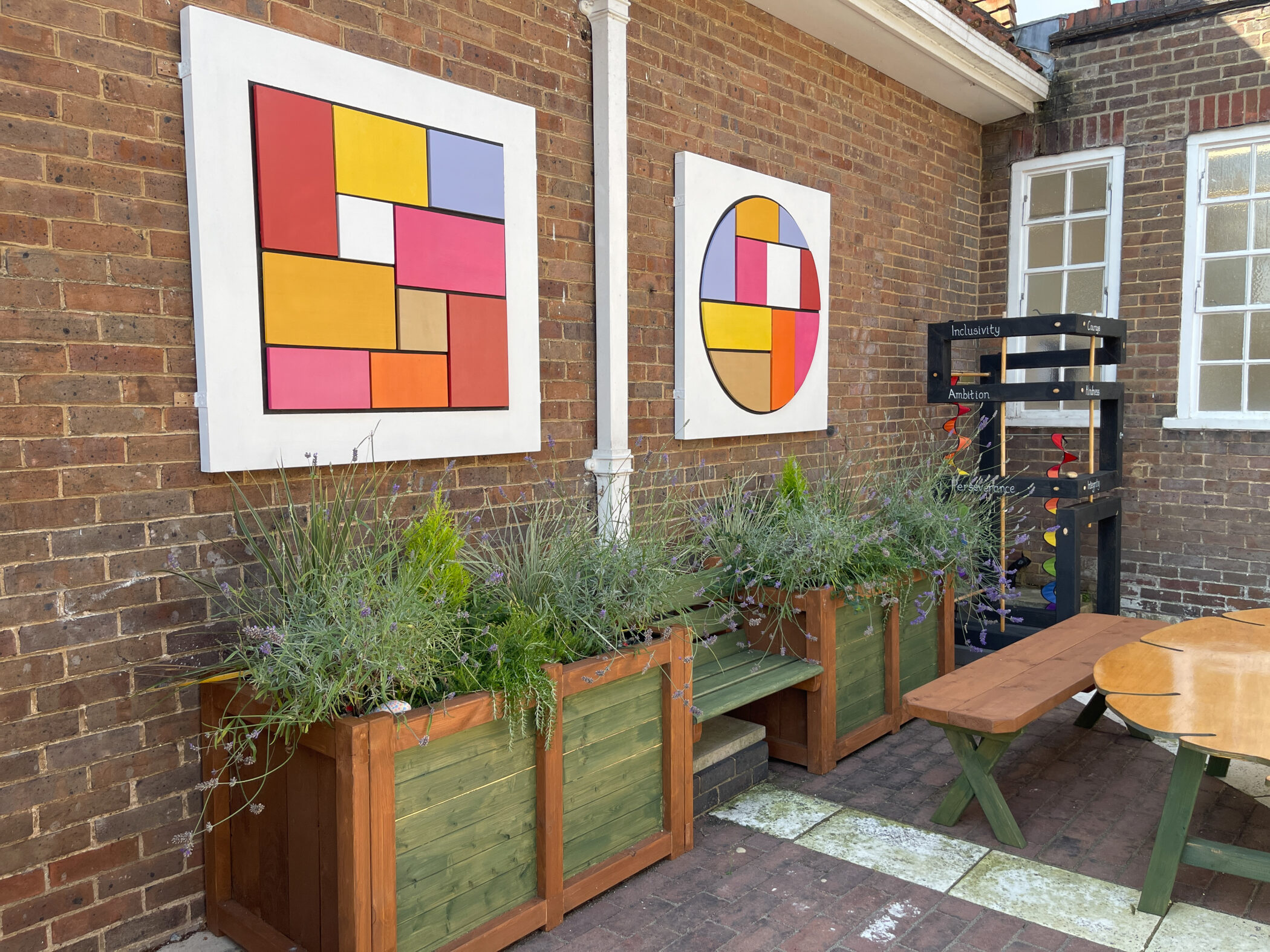
The Sensory Garden
A vibrant outdoor space designed to stimulate the senses through nature, textures, and calming scents.

The Sensory Gym

The Quiet Dining Room
The Quiet Dining Room is an option for both Prep School and Senior School students, when the noise in the main dining hall becomes overwhelming. The students must sit quietly while eating their lunch and may wear ear plugs or defenders during this time. This room was designed based on colour schemes and textures chosen by the students.

The Wellbeing Room
In the Senior school the Wellbeing Room is located on the top floor of the Resource Centre; providing a calming space with weighted blankets, bean bags and sensory tools to support self regulation.

Sixth Form Wellbeing Room
The Sixth Form Wellbeing Room provides a calm space for students who need some time away from the busier common rooms and classrooms.

Sixth Form Study Room
The Sixth Form students have access to all of the resources within the senior school, but in addition, within the sixth form areas of Hind House and Weybridge House, there is a PALS Study Room where students will be allocated a specific desk for them to work during study periods and store their books and folders.

Therapy Dogs
Thanks to the charity ‘Pets as Therapy’, Alfie comes to visit RMS on a Thursday and Friday lunchtime each week. Cadogan girls are supported to attend with a member of staff while the senior girls can drop in to see Alfie or have 1:1 time with him if appropriate.

Parent Coffee & Chat Morning
Each term there is an opportunity for parents to attend our PALS Coffee & Chat Morning which is held in The Hive coffee shop within RMS. This is an opportunity for parents to meet each other as well as the SENCos and other invited guests, such as the Occupational Therapist and Speech and Language Therapist.

Neurodiversity Parent Information Evening
In celebration of Neurodiversity Celebration Week and Autism Acceptance Week, we hold an annual event, where we invite guest speakers and students to share their expertise and experiences. These events are open to the local community as well as RMS parents.
Professional Support
At RMS we support access to an Educational Psychologist, Occupational Therapist and Speech and Language Therapist all of whom work on school site and can be commissioned by parents to carry out assessments and 1:1 work with their child.

FAQ for Parents
What is PALS, and how does SEND support work at RMS?
At RMS, our Inclusion department is called PALS (Provision of Assisted Learning and Support). We support students with additional needs to access the mainstream curriculum, reach their academic potential, and thrive.
We cater to the four broad areas of need:
- Communication & Interaction (e.g., ASD, speech and language)
- Cognition & Learning (e.g., Dyslexia, Dyspraxia, Dyscalculia)
- Social, Emotional & Mental Health (e.g., ADHD)
- Sensory & Physical Needs (e.g., hearing impairments, processing difficulties)
Students must be able to access our mainstream environment independently, though we provide tailored supportive strategies.
Do you accept students with an EHCP or EBSNA?
For students with an EHCP, we meet with parents and the child first to ensure we can meet their needs before responding to a local authority consultation. If your child experiences Educationally Based School Non-Attendance (EBSNA) or is struggling in their current setting, please contact us to discuss how we can help.
Does my child need a formal diagnosis to access support?
No. Our focus is on meeting the individual needs of every student, whether they have a formal diagnosis or not.
Who is the SENCo, and how do I get in touch?
At RMS we have three SENCos:
Mrs Manning – Ruspini House
Miss Spencer-Pell – Cadogan House
Mrs Hawkins – Director of Learning Support (SENCo) for the Senior School and Sixth Form. You can request an assessment or discuss your child’s needs by emailing her at chawkins@rmsforgirls.com.
How are a child’s learning needs identified?
We identify and monitor needs through several stages:
- Transition Data: Reviewing information shared by parents and previous schools prior to joining.
- Screening & Baseline Testing: Literacy screening and baseline assessments are conducted at the start of Year 7.
- Ongoing Monitoring: End-of-year reporting data is reviewed annually. Parents or teachers can also raise concerns at any point.
- Exam Access Arrangements: All Year 9 students are screened for exam access arrangements in line with JCQ criteria. Internal exam arrangements begin in Year 9 once required evidence is in place.
What support is provided in the classroom?
All teaching staff deliver Quality First Teaching, adapting classroom strategies for individual profiles. We do not have in-class support assistants in the Senior School, as students are expected to work independently across subjects.
How do teachers stay informed?
Teachers access individual profiles, diagnoses, and recommended strategies via our secure management system (iSAMS). Profiles are updated regularly, and staff complete ongoing CPD on conditions such as Dyslexia, ADHD, and Autism to ensure inclusive teaching.
What targeted interventions and specialist provisions are available?
Depending on individual need, support includes:
- Curriculum Adjustments: Options in Years 8 & 9 to take one Modern Foreign Language instead of two to focus on core English and Maths skills.
- 1:1 & Small Group Support: 1:1 specialist PALS lessons and small study-skills groups (held during lunchtime).
- Targeted Interventions: Year 7 spelling interventions, 1:1 mentoring, subject clinics, and supervised homework clubs.
Is there a cost for support?
Core classroom adaptations and Quality First Teaching are free. 1:1 specialist PALS lessons and small study-skills groups incur an additional charge.
How do you support students’ social and emotional development?
Alongside Form Tutors, Heads of Year, and House Mistresses, we offer a dedicated support network:
- Mental Health & Pastoral Care: Three qualified school counsellors, ELSA-trained staff, and an experienced medical team.
- Specialist Spaces: A sensory garden, sensory gym, quiet dining area, and dedicated medical time-out/wellbeing spaces.
- Social & Community Groups: Social Communication groups, lunchtime support, and therapy dog visits.
What is specialist coaching?
Coaching is student-led support provided by a Chartered Educational Psychologist. Sessions help students understand their unique learning profiles, manage executive function challenges (such as ADHD), or build coping strategies for anxiety using Cognitive Behavioural Therapy (CBT) principles.
Coaching begins with a low-pressure “chemistry session” to ensure the student feels comfortable, with subsequent sessions scheduled during the school day to minimize disruption to academic lessons.
How are parents supported?
We believe strong communication with families is essential. We offer:
- Direct email contact with the SENCo (chawkins@rmsforgirls.com).
- Individual consultations with the SENCo during Parents’ Evenings.
- Half-termly “Coffee & Chat” informal mornings for parents.
- Neurodiversity Parent Information Evenings.
- An active Parent Support WhatsApp group.




What Does PALS Mean To You?
In this second mini-episode of Stirred By The Sun, our school podcast: we hear directly from two RMS students as they reflect on the powerful impact our PALS (Provision of Assisted Learning and Support) department has had on their journey at RMS. This heartfelt snippet is part of a larger conversation exploring PALS at RMS. Listen below!
RMS Proud to be a Pioneer School
RMS is proud to have been a pioneer school, implementing 'Autistic and OK' - a fantastic new initiative from Ambitious about Autism. You can find out more about the programme, and how it has benefited our pupils, by watching the video below.